Buying a Polocrosse Horse: Part 1
This week we will be focusing on one of the most difficult parts of the sport – finding your polocrosse pony! A grade player and horse trainer Hamish Gillanders will be guiding us through the different options over the next few days, so if you are looking for your next perfect partner or project pony then read on…
Getting a new horse is always exciting, but it can also be quite a nerve-wracking situation. It’s a big financial commitment and it’s always a bit of a gamble! Buying a new horse for polocrosse can be a particular challenge as you often won’t be able to try the horse in a game before you buy. This makes it important to have some idea of what it is you are after before you start shopping.
What should you be looking for when you try a horse for the first time? What questions should you ask? How can you give yourself the best chance of success with your new horse once you’ve got it home? This series of articles will give some ideas of where to find polocrosse horses and how best to go about your search for your next playing partner.
I find that when looking for a polocrosse horse in the UK players tend to steer down one of three paths
1. Buying a horse that is already playing polocrosse
This has merits in that the horse already knows the game, is used to the racket and ball, is comfortable playing with the other horses and is able to perform the much needed moves to play such as a rollback and haunch turn (all whilst only being steered with one hand, of course!). The only real drawback with this option is that it tends to carry the highest price tag. If this isn’t an issue, however, it is by far the best way to improve as it allows you to focus solely on your own game play without having to school and train your horse.
2. Buying from polo
Another common route that I see people choose forks into two smaller paths; both involving horses that have come out of polo and are no longer suitable for the sport. The first option is to buy a horse who is too old to reach the top speed required for high level polo. This doesn’t seem to be such an issue in polocrosse as our pitch is so much smaller than a polo field, with less emphasis on ‘top speed’ in straight lines.
These horses are perfect for beginner polocrosse players as they don’t carry the same price tag as playing polocrosse horses, however they do have the forgiving “been there, done that” attitude that allows green players to get to grips with the game and their own stick skills. The similarities between polo and polocrosse (the use of a stick and ball, contact with other horses and neck reining to mention a few) make it an easy cross over for such horses. There’s isn’t much bad to say about this option! Older and steadier polo ponies can make lovely family horses as well as an excellent playing partner.
The second most common reason why a horse is no longer suitable for polo is not down to their age but that at the speeds required in polo they cannot handle what is being asked of them mentally. This tends to occur with fizzier horses with a more excitable nature. This results in what I personally term “plenty of go and not enough woah!” or the generic nickname of “cooked”. You may be wondering what the great attraction is to these horses as surely brakes are a fundamental thing needed in all riding of any discipline? You’d be right to wonder, however with a significantly smaller pitch and more stops and turns required, horses in this category often won’t reach the sheer speeds that they would do in polo meaning some can, and indeed do, get their brakes back.
Another great attraction people find in these horses is they have lower price tags and yet still boast top speed, ability and knowledge of a similar game. This path tends to typically attract ‘up and coming’ players as it appears you can get all the qualities you desire for a faster game all for a price much lighter on the wallet, with the only drawback being the lack of brakes! To the more gung-ho player this can be considered a risk worth taking. It is at this point that I have to say that I’ve very much fallen into this honey trap myself more than once!
3. Buy ‘off the track’
Possibly the cheapest road to go down is the re-schooling of ex-race horses. With RoR (Retraining of Racehorses) prizes being given out at many tournaments and with a growing RoR community to fall back on for support it can be a very attractive prospect.
The natural speed and athleticism found in thoroughbreds make them more than capable of performing the moves needed for the game. The only drawback with ex-racers is that they have spent a life running in straight lines around a race track. This can mean teaching the actual moves needed for polocrosse is a long and tricky programme of retraining. Along with teaching them the actual game there is the task of getting them used to the stick, ball and other horses.
With all this being said if the knowledge, patience and time is available to put into the retraining then ex-racers can be a very rewarding route to pursue.
In the next few articles I’ll discuss how to make the most of each of these options, and how best to go about finding that new polocrosse pony. Whether you’re looking to fly up the grades or clean up those Best Player prizes in D division, finding a horse that fits your goals can make playing polocrosse an absolute dream. Over the years I have been lucky enough to have some brilliant horses, and at various stages of my career they have come from different sources.
Indy
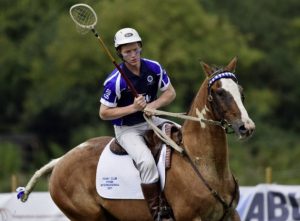
Although quite an unconventional looking horse, I bought Indy from Emily Gilfillan, who had been playing him in A grade. He took me from a newcomer to the UKPA in D grade all the way through to A grade, and has been played by my Dad for the past few years. He has won numerous Best Pony prizes and was an absolute weapon! A true gentleman, he is now enjoying a happy retirement with my parents.
Choccy
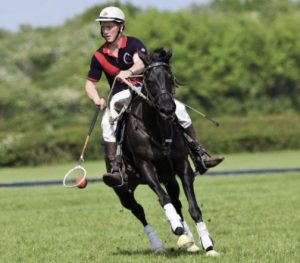
Choccy is a mare who was originally bought from polo for a Junior in our club, but she was a bit too much to handle at the time and I took her on. I played her in A grade and in the UK Open Tests against Ireland in June 2018.
Look out for Part 2 tomorrow – buying out of polocrosse.
Hamish Gillanders is an experienced horse trainer who has just started his own horse training business after working alongside Jason Webb for the past three years. He has had excellent result with horses from all backgrounds and disciplines and is a natural teacher. Hamish has represented the UK and Scotland in polocrosse at Open level, and he enjoys bringing on ‘project’ horses to compete at the top level. He has recently bought a young ex-racer called Edie, who will hopefully have what it takes!Find him on Facebook under ‘hghorsemanship’ or check out his website,www.hghorsemanship.co.uk