
Buying a Polocrosse Horse Part 4: From Racing
This week we will be focusing on one of the most difficult parts of the sport – finding your polocrosse pony! Today, A grade player and horse trainer Hamish Gillanders talks about buying ‘off the track’ – picking up a thoroughbred ex-racer who might have either finished their racing career or never quite made the grade.
Trying an ex-racer with a view to playing polocrosse with it is a bit different to trying a horse that already knows the sport. The nature of racing means that horses that come off the track have never been taught the moves required for polocrosse. This means that when you are trying them out, don’t expect them to know all the basics we use in polocrosse – how to stop hard, roll back, haunch turn or neck rein – straight away.
Having said that, the best horses in polocrosse are naturally well balanced, athletic and responsive. When trying an ex-racer for the first time, see if you can ask them for a left and right canter circle without much intervention from the rider to keep them on track or to strike off with the correct lead. This is a simple test to see how balanced they are. They won’t have been asked to sit down in a stop like a polocrosse horse, so don’t expect it to be perfect! All you’re really after is for the horse to bring their back end underneath themselves correctly when you cue for a stop with your seat and legs, even if they take a few strides to come to a halt. You should try and avoid relying on your reins straight away – you don’t want to get in a tug of war!
Next, see if the horse will change canter lead without their ‘hand being held’ when you change direction. I test this by cantering a figure of eight on a loose rein and seeing what the horse does beneath me. This is a harder test of their balance, a horse that doesn’t manage this cleanly isn’t necessarily a write off but you may have to put more time and work in to improve it.
Don’t worry about trying to neck rein, as this will be new to the horse. More importantly see that they can carry themselves in a steady rhythm without much interference from you. If you have a fence available, try a few roll backs. Canter or trot about a metre in from the fence and ask for the horse to turn back to the outside (into the fence). When asking for a stop or a turn, give the horse some warning. Much like counting strides into a jump, count down ‘3, 2, 1…’ in your head before asking. This will help stop the turn from feeling rushed or messy and will give the horse some time to gather themselves. The turn itself is not so important, but you want the horse to come out of the turn on the correct canter lead, without disuniting. This is pretty challenging for the horse’s balance! I have put together a short video showing how you can try this yourself.
If the horse cannot complete all of these movements perfectly, it doesn’t mean that they won’t be any good at polocrosse. However, the best playing horses around have phenomenal balance which is a natural advantage – it can only be improved, not taught. This allows them to learn the complex moves that we ask of them in polocrosse more easily as they can put their legs in the right place without having to think about it too much.
Racehorses have a bad reputation for having poor ground manners. It’s important to remember where they’ve come from and how old they are. Many ground issues can be ironed out over time with patience and careful management. However, some vices learnt from a young age can be so ingrained that you won’t see much improvement. Vices racehorses may have include windsucking, weaving and crib biting. Consider the impact this may have on you as an owner, as for some poor ground manners are intimidating and can be dangerous. You need to make sure that you have enough confidence and experience to deal with any possible vices. This of course doesn’t apply to every ex-racehorse, but due to the high intensity of their racing lifestyles it’s important to be understanding of the source of their habits. Another cliché, but one worth being aware of, is that racehorses may have poor quality feet. Make sure you have a proper inspection when you go to try the horse as the old saying “no hoof, no horse” does have merits.
Once you have found the horse, the next challenge is the reschooling for polocrosse itself!
Horses learn best when they’re given a job to do. This should be considered when reschooling a racehorse for polocrosse. I use set patterns to begin to teach the horse the movements, which I then use alongside other horses, and eventually in slow chukkas.
These can be as simple as a barrel race pattern, or a clover leaf shape. I’ll then incorporate these movements with patterns involving another horse, where possible. This gets them used to watching and responding to the other horses. Once they’ve started to become comfortable with these exercises, progress to using the movements in slow chukkas. Be aware that line outs are very unusual for horses and take a fair bit of getting used to. Ask whoever is throwing the ball in for you to be sympathetic to your horse’s needs. They should be standing still and relaxed before the ball is thrown.
When getting a new horse used to polocrosse, it is important to build up their confidence. You should give them as many ‘wins’ as possible, as they won’t learn and try for you if they keep getting bashed into by other riders or horses. When working the area, for example, ask the defending player to let you pass once your horse has successfully performed a move. This would ideally be a right hand turn, as we (speaking for right handed players) generally don’t use this move nearly enough. Plus crowds love a big old right hand turn in front of the posts!
These horses take time to retrain, but the natural ability is often all there. You can end up with a lovely, athletic horse that can really excel at the sport as well as being a bit of an ‘all-rounder’.
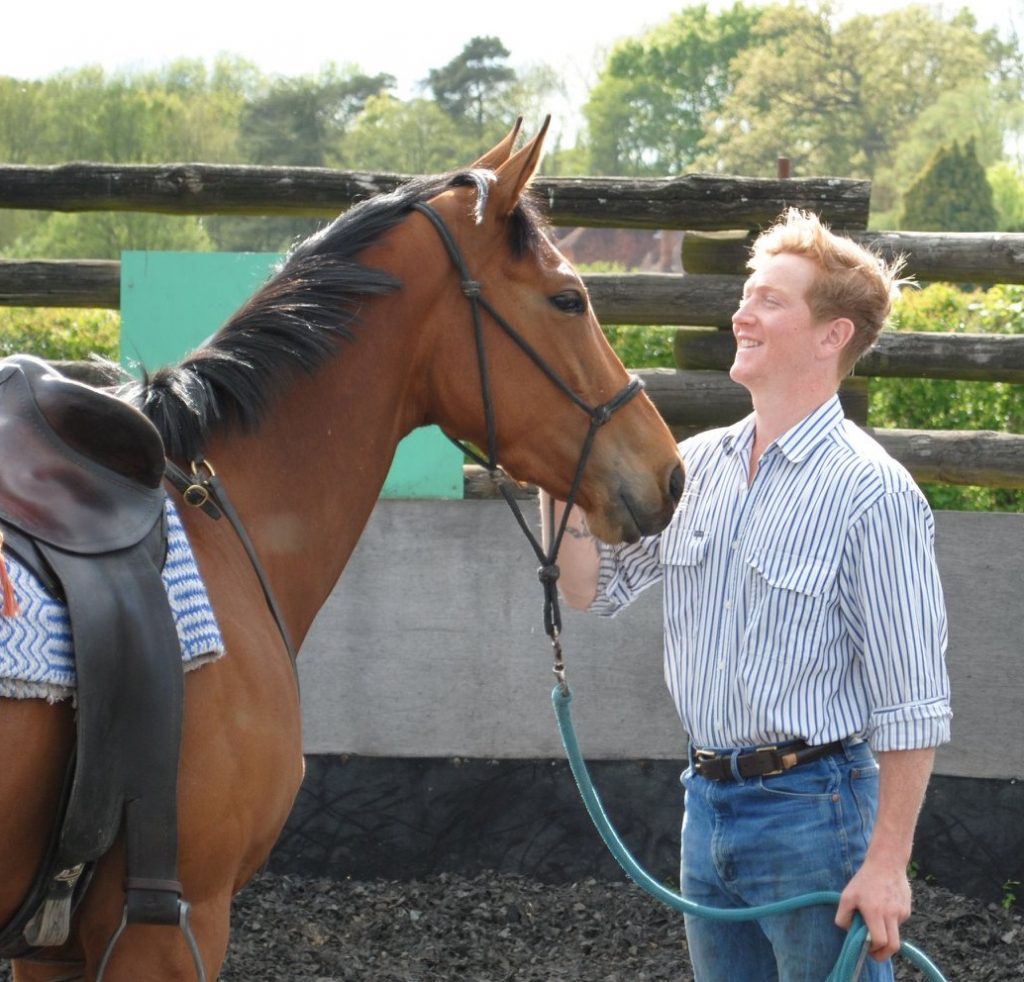
My new ex-racer – Edie. She’s really talented and it taking to her new life like a duck to water!
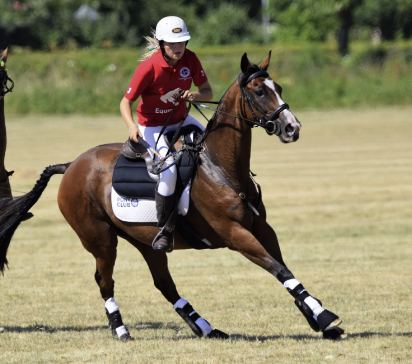
Horizon (Sean Hardy, Charlie Hewitt and now owned by Eve Thomason) is a fab example of a lovely horse that originally came from racing. She’s played a consistently high level of polocrosse in recent years. (Photo credit: Izzy BC)
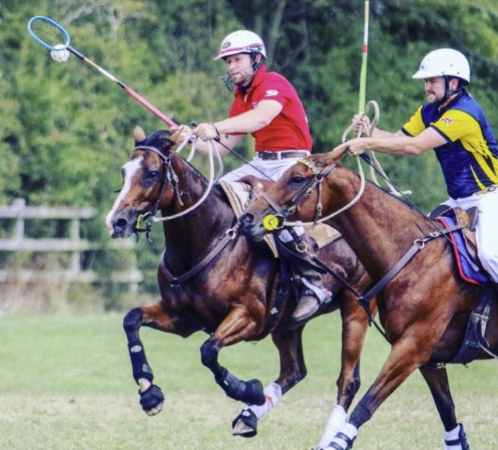
Pip Rowland’s horse, Cosmic Moon, has been successfully retrained for polocrosse after coming out of racing. He has done an excellent job of her and she now plays regularly in A grade and played in the 2018 open test series against Ireland.

Hamish Gillanders is an experienced horse trainer who has just started his own horse training business after working alongside Jason Webb for the past three years. He has had excellent result with horses from all backgrounds and disciplines and is a natural teacher. Hamish has represented the UK and Scotland in polocrosse at Open level, and he enjoys brining on ‘project’ horses to compete at the top level. He has recently bought a young ex-racer called Edie, who will hopefully have what it takes!Find him on Facebook under ‘hghorsemanship’ or check out his website,www.hghorsemanship.co.uk