Horses of Polocrosse – Golden Oldies!
As the start of our 2020 season has been sadly postponed, we have decided to use this time to take a closer look at the real stars of our sport – our horses and ponies! This week our focus will be on the true backbone of our sport, the golden oldies who are still out there on the pitch teaching new generations of players all about the game!
Of all the horse sports, polocrosse is one of the few that not only recognises the achievements of its veteran horses, but also fully appreciates the important role they play in helping to develop our new generation of players. As many of us know, an experienced polocrosse pony is worth their weight in gold – they usually know the game inside out and back to front, are fully aware of where the area lines are, and know exactly when to make their move!
So many of our players in the UK are lucky enough to have learned from one of these ponies at some point during their playing career, and here we take a look at some of our equine veterans who are still out on the pitch, from A grade right down to PJs, playing the game they love with a new generation of riders!
At Nationals, we award the Flecha Peron Trophy each year to the Best Veteran Pony of the event. In 2019 the winner was Petra, owned by the Mitchell family and ridden by Graham Ward, husband of UK player Annemieke Ward. Until early 2019, Graham had barely ridden, but after a trip to the World Cup in April to watch Annemieke and the team he was inspired to take up the reins and stick for himself!
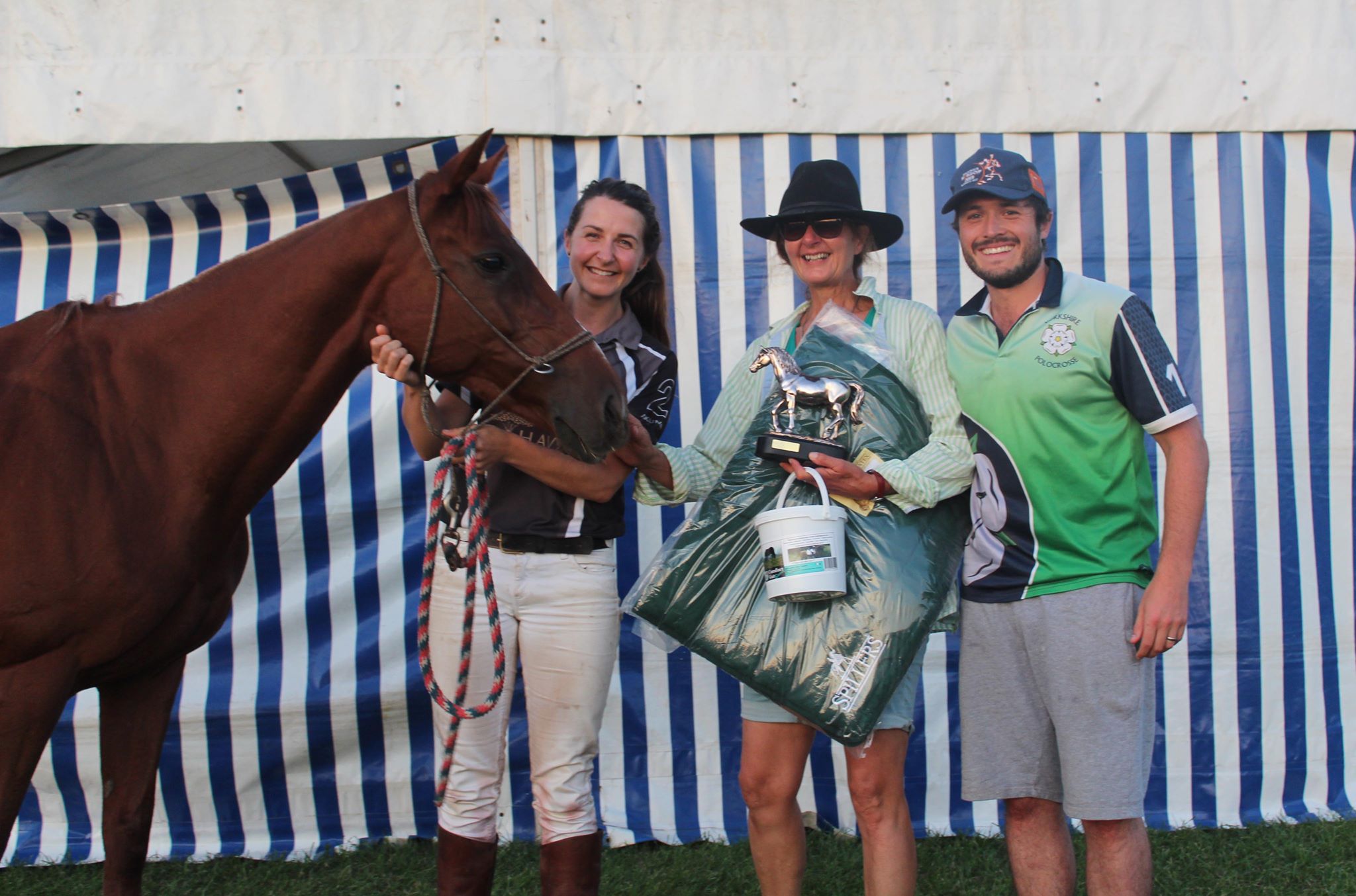
At 23, Petra was the perfect horse to help him start off. Bought out of polo back in 2005, Annemieke played Petra first in Junior grades, progressing upwards through squads and then finally into A grade. Annie’s mother Jeanette then took over the ride
“She has a wonderful nature and plays to suit the level of rider,” says Jeanette when asked what makes Petra such a good polocrosse pony. “She has a great turn and stop and huge ride off. With a heart of gold, she is a doll to have around, genuinely kind and safe.”
These characteristics, coupled with her knowledge of the game, gave Graham the perfect polocrosse horse to start his career. In only a matter of months he went from polocrosse helper to playing at Nationals, scooping not only the Flecha Peron trophy for Petra but also a second place in the E division with his Yorkshire team and the ‘Best Newcomer’ award of the event!
In our PJ division, many of the ponies we see safely carrying their tiny jockeys will often be in their late teens and twenties. One veteran pony (and Flecha Peron winner in 2017!) will need no introduction to the polocrosse world – at 25, the wonderful Pepper has been playing longer than most people in the sport!
In recent years she has most famously partnered Tegan Bristow, flying down the pitch in her pink bandages to win almost every polocrosse award it was possible for her to win! Last season she did a wonderful job bringing on the game of Bruno Ingley, culminating in another successful Nationals and winning the Kirsch Cup. Ever the teacher, she is now taking on more new pupils, and should the season finally get going we look forward to seeing her out on the pitch with Oliver and Lottie Jones, who can’t wait to play their first grass tournaments off the lead rein!
For an aspiring Junior player, a good veteran horse can make all the difference at a crucial point in their game. Annemieke Ward, who was a member of our 2019 World Cup team, credits veteran horse Romeo with giving her the step up she needed to take her game to the next level. In 2002, whilst looking for her first polocrosse horse after playing ponies, she was offered Romeo by the Schaefers. The distinctive flea-bitten grey had played top A and B grade, and at 22 he wasn’t ready to hang up his stock saddle just yet.
“Romeo played such a huge role in developing my polocrosse career”, says Annie. “He helped me in getting noticed and selected for junior squads at a young age and took me into the main grades at tournaments. He lived till 34 years of age but had the heart of a teenager still, we wish we could have cloned this spectacular one of a kind horse and will never forget him and the joy he brought us.”
Emma Muddiman echoes this sentiment. When her daughter Jess moved from PJs to Juniors she knew that the right horse would play an important role. When she bought Spie she knew that the little mare had already brought several others on in the sport.
“It helped immensely having an older pony for Jess to improve her game”, Emma says. “Spie was safe, she knew her job inside out, and it was one less thing to worry about knowing Spie had many years experience. Jess just had to worry about herself and not what the pony was doing!”
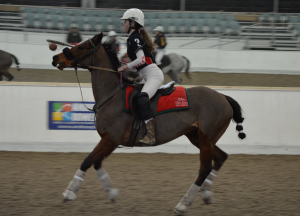
This is a point that is made by many of those who have played a veteran horse. Without having to focus too much on the horse, players are able to concentrate on their own stick skills and game play more which is so vital to help them move up the grades. The benefits of Jess’s partnership with Spie speak for themselves – after coming out of Pony Club minis on her 13.2hh pony, Spie helped Jess to refine and improve her game, culminating in a very successful 2019 season where the pair represented Wales in the PC Four Nations, played in the winning Open Junior team at Nationals, and were accepted onto the PDP programme.
But of course, for some of our veteran horses age really is but a number, and none embody this more so than the amazing Chispa. To any UK polocrosse player, the name Chispa is synonymous with top-level polocrosse. This little horse originally found her UK fame with Joel Sics and is now owned by Kent player Jack Brown. Amazingly, she can still be found out in the A grade outrunning horses half her age!
Jack says “I brought Chispa from Joel at the end of the 2015 season, and at age 18 she was already considered a veteran horse! She has carried me from C grade up to A grade and beyond. Now in her early 20s at 23 she’s still going as well as she ever has, she has won countless best horse awards, best players and taken my polocrosse to a level I doubt I would’ve otherwise achieved!”
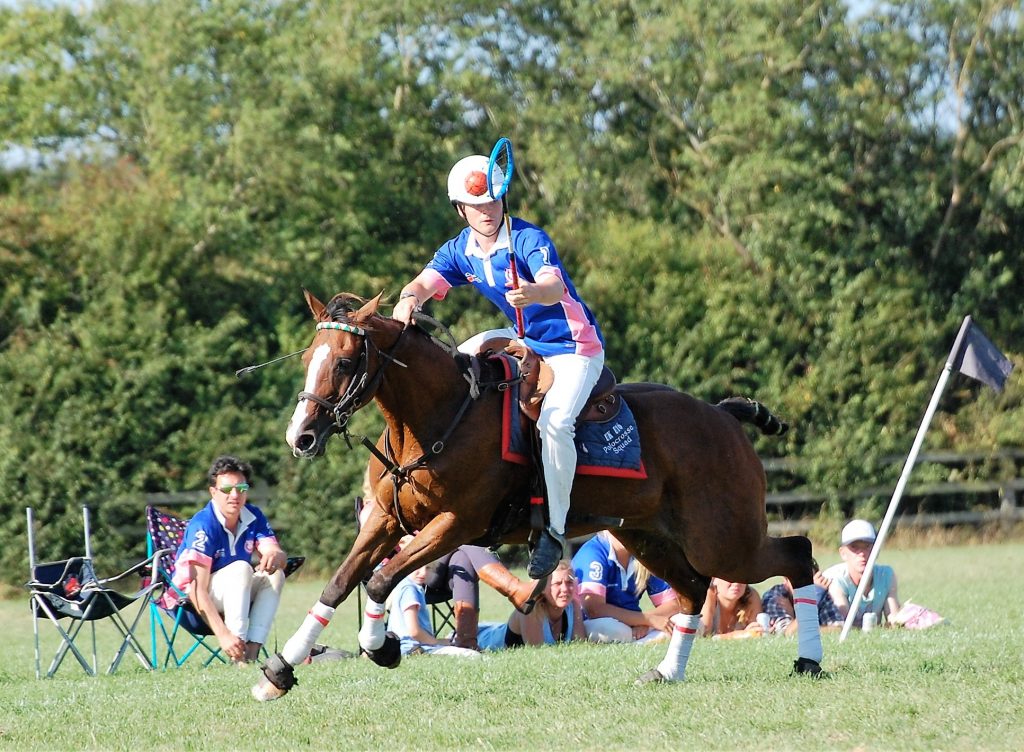
“The fact that she is still going so well at this age is mostly I think down to her, she is a one of a kind horse and one of the reasons she’s still going is because there is nothing she loves more than playing polocrosse. She, to put it simply, doesn’t want to stop playing! However in order to allow her to keep playing she needs to be fit and stay sound. To achieve this we have always given special attention to Chispa’s fitness regime. She has never been a horse that we have just trotted laps with, but then we’ve never done that with any of our horses. She has always done HIIT (high intensity interval training) on multiple surfaces. Whether that be the beach or the road or grass or arenas. I believe that this type of fitness training has enabled Chispa to keep performing at the top level for far longer than many other horses, especially at the top level.”
Anna Tarbuck, who is still playing Luca at the age of 25, agrees with Jack’s thoughts. “Like Jack says, some of these older horses just do not want to stop playing! Luca’s attitude is no different now at 25 than she was when she came out of A grade at 18 – pick up a stick and she’s straight into game mode. Her main frustration is that I’m nowhere near as good at the game as she is! The one thing I quickly learned was to let her make the major decisions in the area as her choices were better than mine! Even now in her advanced years I still can’t use her for umpiring as she just wants to get involved in play!”
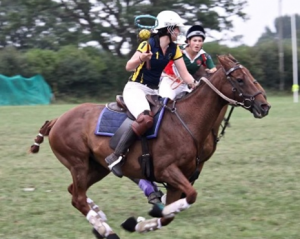
Cara Williams was the last player to have Jake Hall’s Serroco on loan before she retired in last year after helping several players into the sport. Serroco won the Flecha Peron award in 2018, and took Cara from starting as a novice in E division to moving quickly up the grades.
“It really helped as she knew the game so well,” says Cara. “She helped me out when I didn’t even know what I was doing myself! In every game Serroco tried her hardest and was always seen riding off horses twice her size. Anyone who had the privilege to play her was guaranteed to have so much fun.”
So what advice would other owners of ‘golden oldies’ give to players who have an older horse that still loves the game?
“We have had a few golden oldies now, and I think that feeding cod liver oil or linseed is good,” says Jeanette. “Grass is still the best conditioning food but there are some great veteran foods too. It is a good idea to keep them ticking over in the winter. Do not be afraid to ask your vet on how to help keep them sound if they still enjoy playing. With lower grades, juniors and newcomers they can be wonderful schoolmasters.”
Maintaining regular work is something that Emma agrees with. “My advice would be to keep the older pony in work throughout the whole year so the playing season isn’t such a shock when they start. Ailments can be monitored and treated as required, and it doesn’t need to be hard work all year round – over the winter consistent, gentle hacking or lunging can be beneficial rather than just turning away as you might do with a younger horse. Lots of field time if possible is great for lungs, and mental health too. Oh, and a good farrier!”
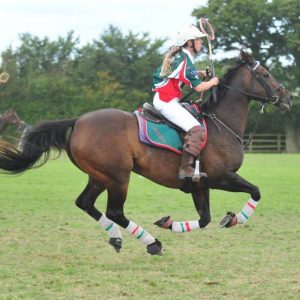
Anna supports this with her own experiences of having older horses over the years. “You need to just stay on top of everything to keep them in the best condition possible – farrier, dentist, physio, if you make sure you have a regular schedule that you stick to it can help you catch tiny niggles before they become issues that are harder to bounce back from as the horse gets older. My farrier, vet and back man all know what polocrosse involves and the kind of pressure it puts on the horse, so they can advise me how to keep her in the best shape possible to play.”
For the player or parent considering an older horse, Cara is able to give a firm recommendation. “The advice I would give is not to be put off by a horse’s age. They really know the game and look after you when playing, and they will be the ones to let you know when they don’t want to play anymore. Of course don’t forget they can sometimes still have a lot more energy than a younger one – Serroco definitely showed this as she always came trotting off the pitch after a chukka looking forward to the next one!”
Finally, we asked our golden oldie owners why they thought polocrosse was a good sport for keeping horses young at heart.
“The fun of playing in a herd certainly is natural to them combined with our excitement and enthusiasm,” muses Jeanette. “I think the way that horses in our sport maintain a high fitness level during season then get periods of rest out of season gives them a good recovery time. They also play a lot on natural grass surfaces which probably helps – I suspect that too much ménage work is where other disciplines wear horses out and they can get bored.”
The one thing we all know as players is that our horses definitely don’t experience boredom on the pitch, so to all those currently out there waiting for the season to start, young and old alike, we hope to see you all soon!
Watch this space for more ‘Golden Oldie’ articles later this week, including advice from nutritionists and physios to help keep your older horse in top condition!